Beneath the datacenter hype and AI narrative, AMD’s fundamentals remain strong—but so do the pressures.
At SignalVest.ai, we look past surface-level growth stories and into what the filings actually say.
Snapshot Red Flags:
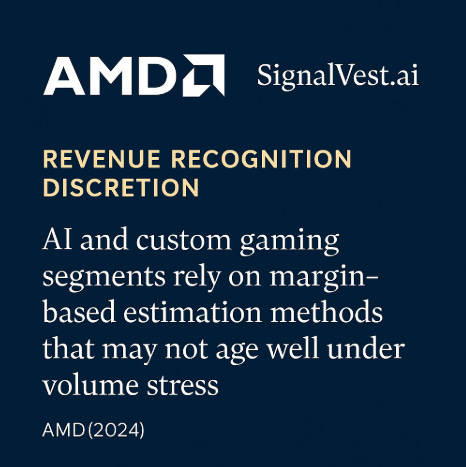
Revenue Recognition Discretion: AI and custom gaming segments rely on margin-based estimation methods that may not age well under volume stress
Inventory Management Concerns: Auditor flagged AMD’s valuation assumptions as a “Critical Audit Matter” tied to demand forecasting
Incentive Timing Flexibility: Deferred marketing & reseller programs may offer AMD discretion to manipulate reported margins
But wait, there’s more
Full Report for Premium Subscribers Only:
What’s inside the PDF:
✅ Red Flag Intelligence Score™ with full breakdown
✅ Forensic analysis across six governance and risk categories
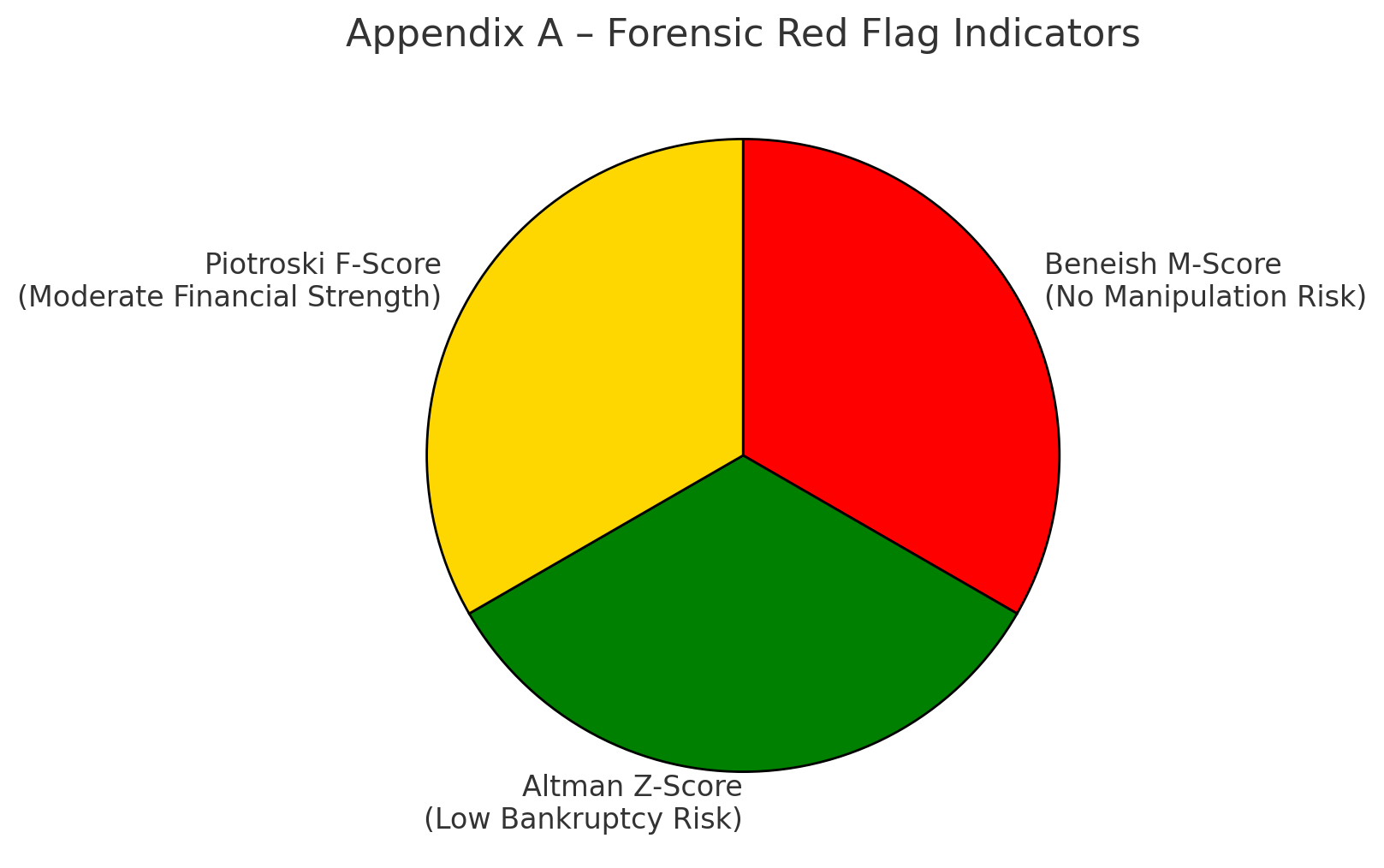
✅ Appendix A: Beneish M-Score, Altman Z-Score, Piotroski F-Score
✅ Interpretation and investor signals on cash, equity, and disclosures
Download the Full AMD Report - Premium Access Only
Preliminary Forensic Risk Highlights — AMD (2024)
1. Revenue Recognition Practices
AMD recognizes revenue primarily at shipment for non-custom products and over time for custom products. A few areas stand out:
Rights of return and price protection agreements with OEMs and distributors introduce significant estimation requirements.
Custom products (mainly Gaming) are recognized using cost-based input methods, which can be manipulated to smooth earnings by altering margin assumptions.
Risk Note: While compliant with ASC 606, the discretion in estimating variable consideration (rebates, returns) and margins opens doors to earnings management—especially in volatile quarters.
Inventory Valuation
Inventories are valued at standard cost, adjusted for the lower of cost or NRV.
The audit noted a critical audit matter (CAM) related to inventory obsolescence reserves, citing significant management judgment tied to assumptions on demand, pricing, and product life cycles.
Red Flag: Inventory overstatement is a classic red flag in earnings manipulation. The fact that this was highlighted as a CAM by Ernst & Young implies elevated audit scrutiny.
Revenue Incentives and Allowances
Incentive programs (advertising, volume-based incentives, special pricing) are recognized as revenue reductions, but some are deferred until offered, potentially giving AMD discretion in timing recognition.
Interpretation: These deferred program costs can be used opportunistically to pad current-period margins and smooth out revenue or offset weak demand periods.
Auditor's Report
Ernst & Young issued an unqualified opinion on financials and internal controls. However, they identified the inventory valuation CAM, signaling material estimation risk in that area.
No Explicit Red Flags for Related Party Transactions or Private Placements
No mentions or disclosures of private placements.
No red flags around off-balance-sheet arrangements, VIEs, or related-party transactions were evident in the available sections.