

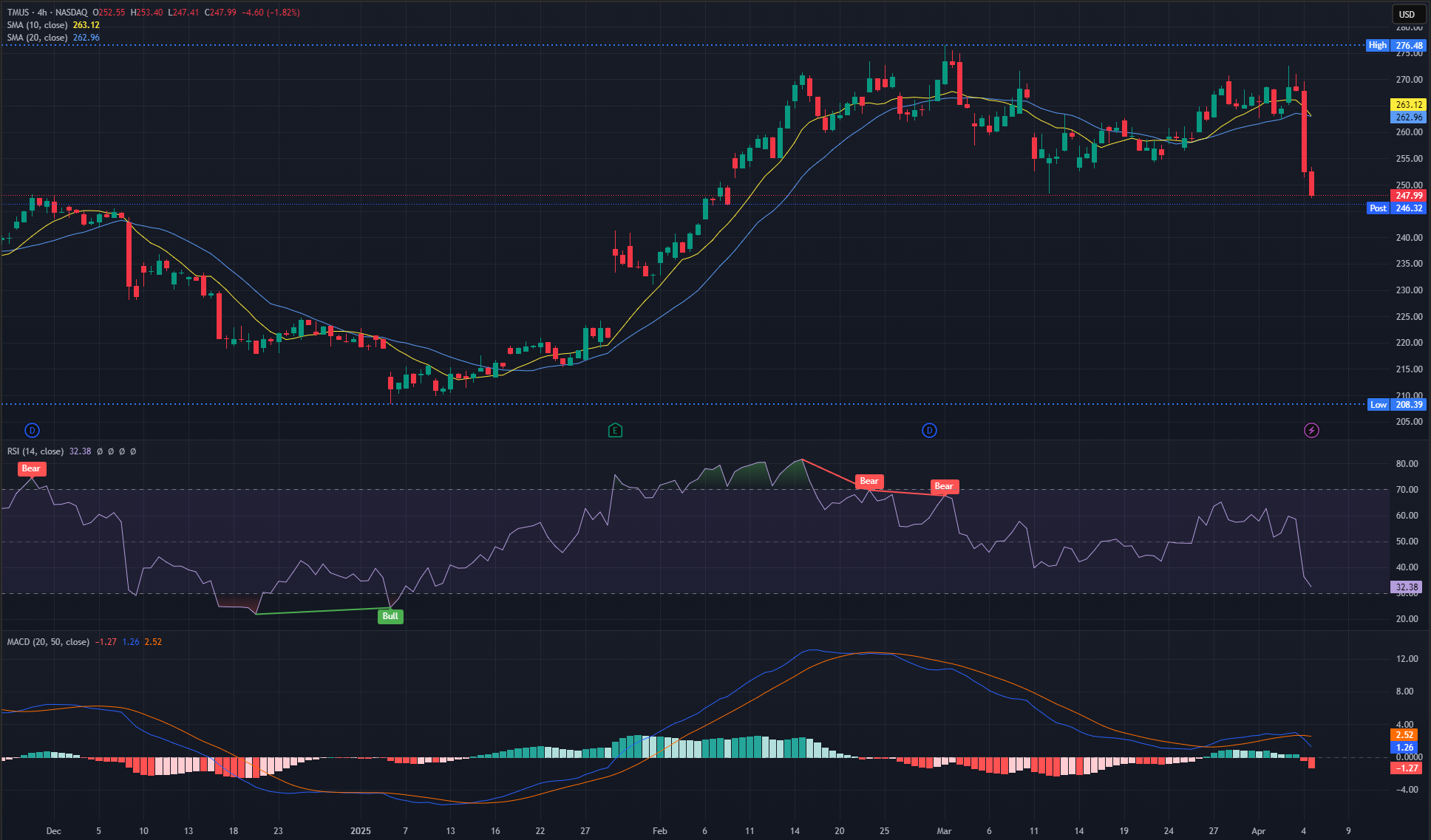
T-Mobile US (NASDAQ: TMUS) has been a standout performer in the telecommunications sector, boasting a stock surge of 54% over the past year and an impressive 694% over the past decade. This growth trajectory has outpaced not only its direct competitors but also several major tech giants. However, beneath this stellar performance lies a complex financial landscape that warrants a closer, more forensic examination.
What’s Happening Under the Surface?
In 2024, T-Mobile reported robust financial metrics:
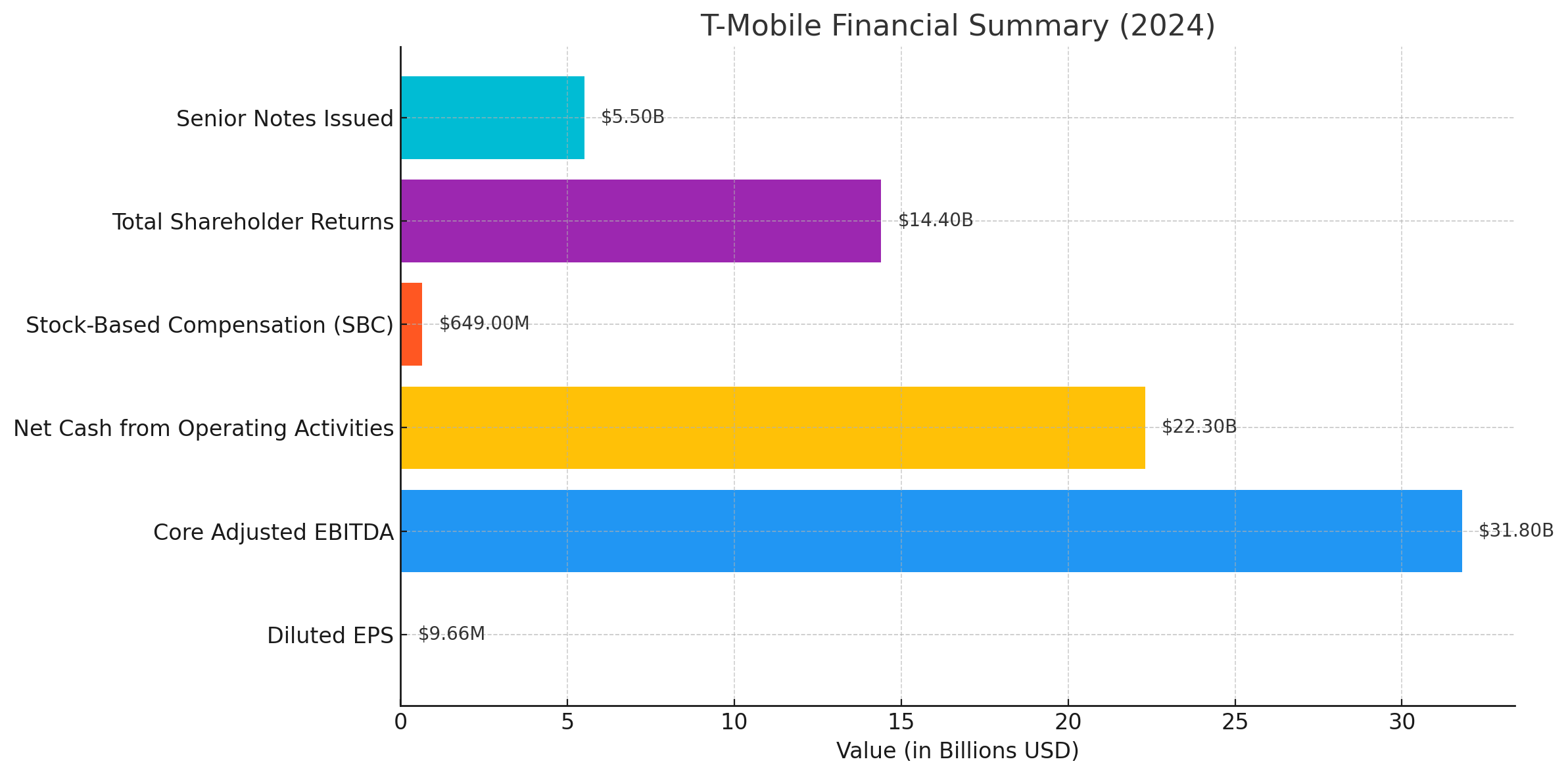
Diluted Earnings Per Share (EPS): Increased by 39% year-over-year to $9.66.
Core Adjusted EBITDA: Rose by 9% to $31.8 billion.
Net Cash Provided by Operating Activities: Surged by 20% to $22.3 billion.
These figures paint a picture of a company in robust health. However, a deeper dive into the financial statements reveals areas that merit closer scrutiny:
Stock-Based Compensation (SBC): In 2024, SBC expenses totaled $649 million. While SBC can align employee interests with those of shareholders, excessive reliance on it can lead to shareholder dilution if not offset by commensurate value creation.
Debt Issuances: T-Mobile has been active in the debt markets:
In January 2024, the company agreed to sell $3.0 billion of senior notes, with proceeds intended for general corporate purposes, including share repurchases and debt refinancing.
In September 2024, an additional $2.5 billion of senior notes were issued, with similar intended uses for the proceeds.
While leveraging debt can be a strategic move, the accumulation of obligations necessitates careful monitoring, especially in a rising interest rate environment.
SignalVest Forensic Take
T-Mobile's capital allocation strategy reflects a balancing act between rewarding shareholders and maintaining financial flexibility:
Shareholder Returns: In 2024, T-Mobile returned $14.4 billion to shareholders, comprising $11.1 billion in stock repurchases and $3.3 billion in cash dividends.
While these actions underscore a commitment to shareholder value, they also raise questions about the sustainability of such returns, especially when funded through new debt issuances.
What the Market Misses
The market's focus on T-Mobile's operational successes and subscriber growth may overshadow underlying financial nuances:
Debt Profile: The company's proactive approach to refinancing and extending debt maturities is prudent. However, the cumulative impact of these obligations on future cash flows and financial flexibility warrants attention.
Operational Efficiency: While T-Mobile has demonstrated strong operational performance, the interplay between its capital expenditures, debt servicing, and shareholder return commitments will be critical in sustaining its growth trajectory.
T-Mobile's impressive market performance is a testament to its strategic initiatives and operational execution. However, a comprehensive investment thesis should incorporate an understanding of its capital structure dynamics, debt obligations, and the sustainability of shareholder returns. As always, discerning investors should look beyond the headlines to fully grasp the financial intricacies at play.
For a more detailed analysis and ongoing updates, consider subscribing to SignalVest for forensic insights into market dynamics and capital structures.