

In 2024, Chinese companies have issued convertible bonds at an unprecedented rate, aiming for cost-effective financing and increased offshore cash reserves. This trend offers insights into corporate financing behaviors and potential investor considerations.
What's Happening Under the Surface?
Companies like Alibaba and Ping An have led this surge, contributing to a record $18.8 billion in convertible bond issuances, surpassing the previous 2021 record. The appeal lies in the cost efficiency of convertible bonds, offering savings up to 4 percentage points compared to conventional dollar bonds. The demand is further fueled by higher expected US interest rates and companies' needs to fund share buybacks to bolster stock prices.
SignalVest Forensic Take
While convertible bonds provide cheaper financing options, they also introduce potential dilution risks for existing shareholders. The strategic use of these instruments reflects companies' responses to higher expected US interest rates and the need to fund share buybacks to bolster stock prices.
What the Market Misses
Investors should be aware of the balance between cost-effective financing and the potential for dilution. Assessing the terms of these convertible bonds and the issuing companies' financial strategies is essential for informed investment decisions.
Summary Table

SignalVest Red Flag Intelligence Score: 6.5 / 10 – “Moderate Risk”

The surge in convertible bond issuance by Chinese companies reflects a strategic approach to financing amid changing economic conditions. Investors should conduct thorough due diligence to understand the potential impact on their investments and the companies' future performance.
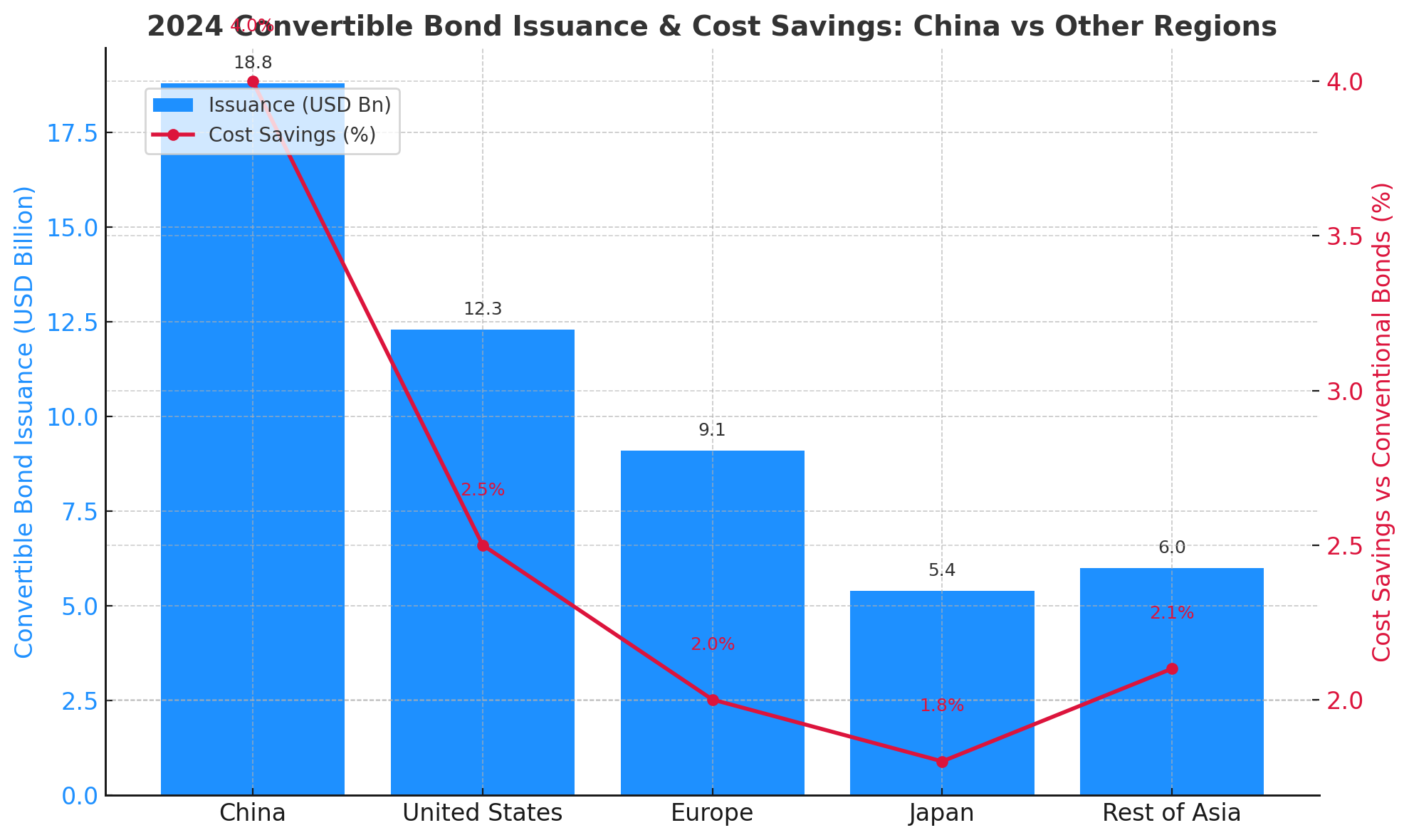
Here is a chart illustrating 2024 convertible bond issuance and cost savings across major regions. It highlights China's leadership in issuance volume and its substantial cost advantage relative to conventional bonds. This dual-axis visualization underscores the strategic financial positioning of Chinese firms versus their global peers.