

On April 2, 2025, President Donald Trump announced a comprehensive set of tariffs, marking a significant shift in U.S. trade policy. This initiative, referred to as "Liberation Day," introduces a baseline 10% tariff on all imported goods, with additional country-specific tariffs targeting approximately 60 nations. The administration asserts that these measures aim to bolster domestic manufacturing and rectify longstanding trade imbalances.
Key Components of the Tariff Announcement:
Universal Tariff: A 10% tariff will be imposed on all imported goods, effective April 5, 2025.
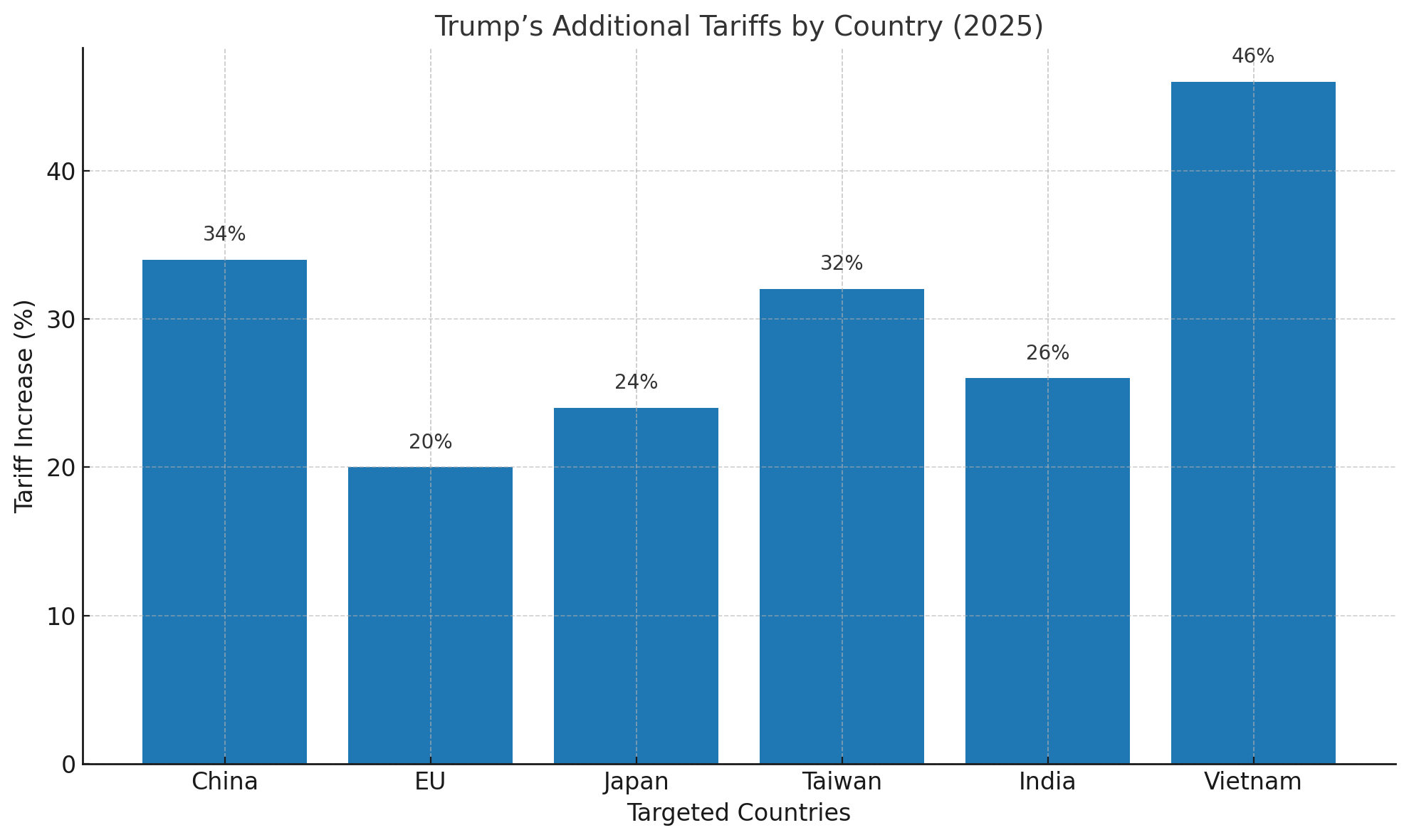
Reciprocal Tariffs: Additional tariffs, calculated based on trade deficits and other factors, will be applied to specific countries starting April 9, 2025. Notable examples include:
China: An additional 34% tariff, cumulatively resulting in a 54% tariff when combined with existing levies.
European Union: An additional 20% tariff.
Japan: An additional 24% tariff.
Taiwan: An additional 32% tariff.
India: An additional 26% tariff.
Vietnam: An additional 46% tariff.
Automobile Tariffs: A 25% tariff on all imported automobiles took effect immediately following the announcement.
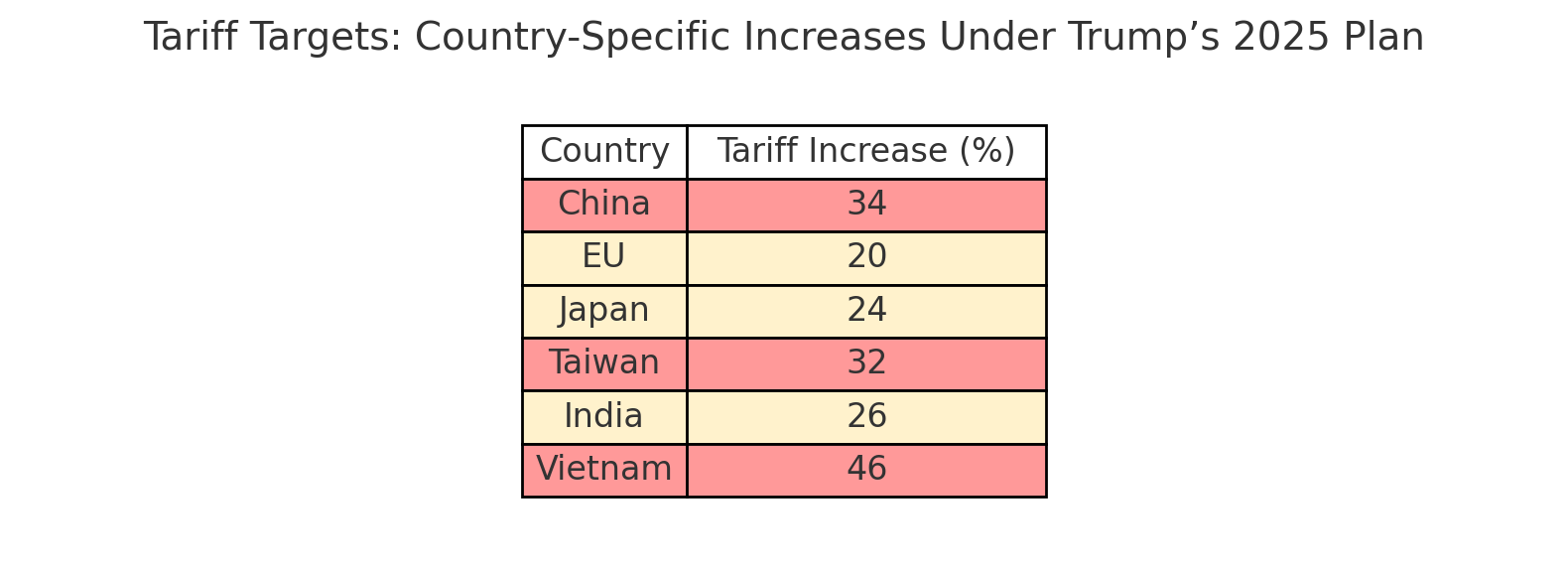
🔴 Red = High tariff increase (≥30%)
🟡 Yellow = Moderate tariff increase (<30%)
Rationale Behind the Tariffs:
President Trump framed these tariffs as a response to what he described as a "national emergency" stemming from a substantial U.S. trade deficit. He asserted that the measures would stimulate domestic production, create American jobs, and generate significant revenue to reduce taxes and the national debt. The administration emphasized that these tariffs are intended to address unfair trade practices and encourage other nations to eliminate their own trade barriers.
Market and Economic Reactions:
The announcement had immediate and profound impacts on financial markets:
Stock Market Declines: Major U.S. stock indices experienced significant drops. The Dow Jones Industrial Average futures fell over 2%, the S&P 500 declined by 3.7%, and the Nasdaq Composite slid by 4.6%.
Sector-Specific Impacts: Companies heavily reliant on international supply chains, such as Apple and Nike, saw their stock prices decline sharply due to concerns over increased costs and potential retaliatory measures.
Investor Sentiment: Economists and market analysts expressed concerns that these tariffs could lead to increased consumer prices, reduced consumer confidence, and heightened risks of a recession.
International Response:
The global reaction to the tariffs was swift and pointed:
Retaliatory Threats: Several affected countries, including China and members of the European Union, indicated intentions to impose retaliatory tariffs on U.S. exports, raising fears of an escalating trade war.
Diplomatic Criticism: Leaders from various nations criticized the unilateral nature of the tariffs, arguing that they undermine international trade norms and could destabilize the global economy.
Implications for Investors:
For investors, the implementation of these tariffs introduces several considerations:
Increased Volatility: The uncertainty surrounding international trade relations is likely to contribute to heightened market volatility in the near term.
Sectoral Shifts: Industries dependent on imported goods or international supply chains may face increased costs, potentially impacting profitability. Conversely, domestic industries that compete with imports might experience a temporary competitive advantage.
Long-Term Economic Impact: The potential for retaliatory measures and the broader implications for global trade could influence long-term economic growth and investment strategies.
President Trump's "Liberation Day" tariffs represent a pivotal moment in U.S. trade policy, with far-reaching implications for the domestic and global economy. While the administration posits that these measures will revitalize American manufacturing and correct trade imbalances, the immediate market reactions and international responses suggest a complex and potentially contentious path forward. Investors and market participants should closely monitor developments and consider the broader economic context when making investment decisions.
This analysis is based on information available as of April 3, 2025. Readers are encouraged to consult multiple sources and stay informed on ongoing developments.